
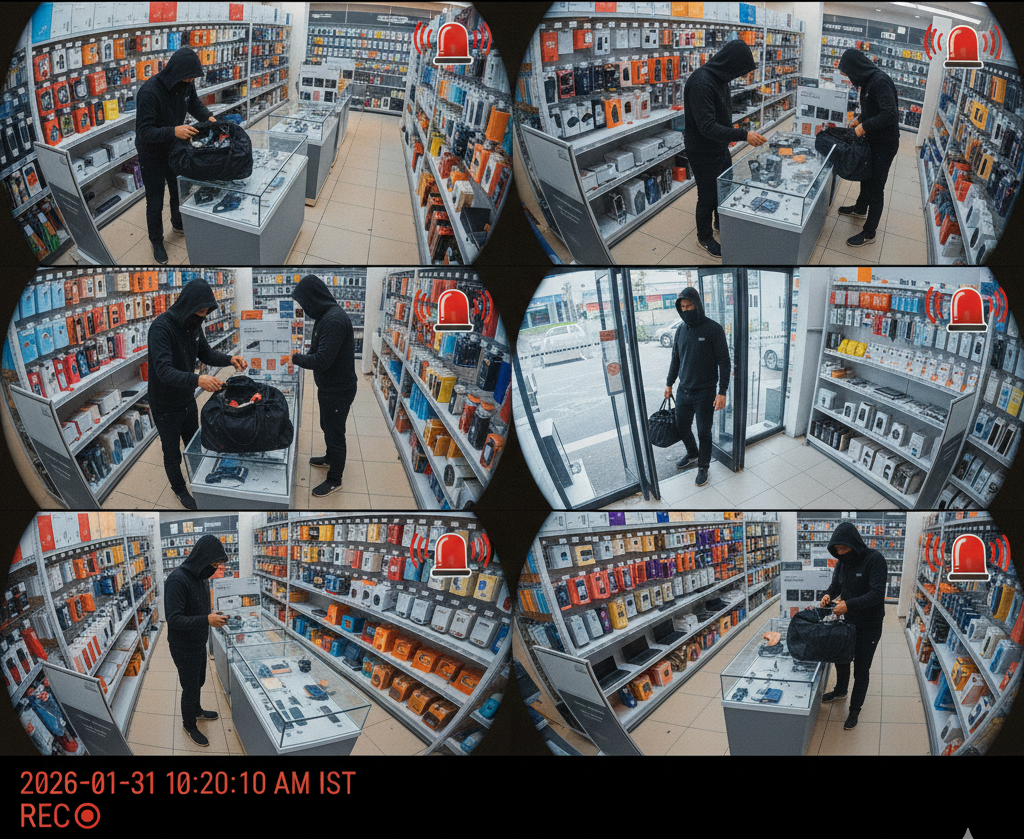
Retail theft has long been a major challenge for businesses, leading to significant financial losses and security concerns. In 2025, AI-powered theft prevention has emerged as a groundbreaking innovation that is transforming how retailers combat shoplifting. By using advanced surveillance technology, machine learning, and real-time behavioral analysis, AI is helping businesses reduce losses and enhance security without relying on traditional profiling methods.
The Rise of AI-Powered Theft Prevention in Retail
Retail theft, also known as shrinkage, costs businesses billions of dollars annually. According to the National Retail Federation (NRF), retail shrinkage amounted to over 100 billion dollars in losses in 2024. Traditional security measures like manual surveillance, RFID tags, and loss prevention teams are costly and inefficient in preventing modern shoplifting tactics.
As theft incidents rise, retailers are increasingly turning to AI solutions that can detect suspicious behavior before a crime occurs. One such innovation is Veesion, an AI-driven software that analyzes surveillance footage in real-time to identify shoplifting attempts. Unlike conventional security cameras that passively record footage, this AI system actively monitors customer behavior, flagging unusual movements that may indicate theft.
Retailers using AI-powered theft prevention have reported up to a 50 percent reduction in shoplifting incidents, making it a game-changer for the industry.
How AI Theft Prevention Works
AI-powered theft detection operates through a combination of computer vision, machine learning, and real-time alerts. Here’s how it works:
Surveillance Monitoring
- AI systems analyze live security camera feeds, identifying customers’ body language and movements.
- The software learns to differentiate between normal shopping behavior and suspicious actions, such as concealing items.
Behavioral Analysis
- AI models are trained to detect specific gestures associated with shoplifting, such as repeatedly looking around, placing items in bags without scanning, or hiding products under clothing.
- Unlike traditional profiling, which often leads to biases, AI focuses purely on movement and behavior.
Real-Time Alerts
- When suspicious activity is detected, an instant alert is sent to store employees or security personnel.
- Staff can then take immediate action, such as approaching the customer for assistance, reducing the likelihood of theft without confrontation.
Continuous Learning and Improvement
- AI theft prevention systems constantly improve through machine learning.
- The more data they process, the better they become at distinguishing between normal and suspicious activities.
Benefits of AI-Powered Theft Prevention for Retailers
AI-driven theft detection is reshaping retail security strategies with a range of benefits:
Reduced Losses and Shrinkage
Retailers using AI theft prevention have reported a significant decrease in inventory losses. Since AI can detect theft before it happens, businesses can intervene in real-time, preventing losses before they impact profits.
Faster and More Efficient Security
Unlike traditional surveillance systems that require manual monitoring, AI provides instant alerts and automatic detection, reducing the need for human intervention. This allows security teams to focus on confirmed incidents rather than continuously watching screens.
Elimination of Bias and Profiling Issues
One of the major concerns in retail security has been racial or demographic profiling. AI-powered systems analyze behavior instead of personal attributes, ensuring fair and unbiased theft detection. This reduces discrimination risks and improves the overall shopping experience.
Better Staff Productivity
Retail employees no longer need to manually track every suspicious customer. Instead, they receive real-time alerts, allowing them to focus on customer service while security systems handle monitoring.
Cost Savings on Security
AI-powered systems reduce reliance on large security teams, saving businesses money on security personnel while increasing theft prevention efficiency.
Real-World Example: AI in Action at Laurel Ace Hardware
A real-world example of AI-powered theft prevention comes from Laurel Ace Hardware in East Oakland. This store implemented Veesion’s AI software and experienced a 50 percent drop in shoplifting incidents.
Instead of relying on manual monitoring, the store’s AI system flags suspicious movements, enabling employees to intervene before an item is stolen. The result is lower theft rates, reduced financial losses, and a safer shopping environment.
Challenges and Ethical Considerations
While AI-powered theft prevention has numerous advantages, it also comes with challenges and ethical concerns:
Privacy Issues
Customers may worry about being constantly monitored. Retailers need to clearly communicate how AI is being used and ensure compliance with data privacy regulations.
False Positives
AI systems can occasionally misidentify innocent shopping behavior as suspicious. Continuous learning and human oversight are essential to refining accuracy.
Integration Costs
Implementing AI theft prevention requires an initial investment in technology and training. However, the long-term cost savings make it a worthwhile investment.
How AI Theft Prevention Enhances Customer Experience
Contrary to the belief that AI surveillance creates a hostile shopping environment, AI-powered theft prevention can actually improve customer experience:
- Non-intrusive security: Unlike traditional security guards who may follow customers around, AI discreetly monitors store activity.
- Faster checkout experience: AI minimizes the need for unnecessary security checks, speeding up the shopping process.
- Safer retail environment: Reduced theft means fewer conflicts and a more relaxed shopping atmosphere.
Other AI Innovations Complementing Retail Security
AI theft prevention is not the only innovation improving retail security. Here are other AI-powered advancements working alongside theft detection systems:
AI-Powered Smart Shelves
Smart shelves use sensors and AI to detect missing inventory in real-time. If an item is removed without payment, alerts are triggered, helping retailers track potential theft.
Facial Recognition for High-Risk Areas
Some retailers are integrating AI facial recognition to identify known shoplifters. This ensures security teams focus on repeat offenders rather than profiling new customers.
AI-Driven Fraud Detection
AI is also helping retailers identify fraudulent transactions at checkout. By analyzing purchasing patterns, AI can flag suspicious purchases and prevent fraudulent refunds or credit card scams.
The Future of AI Theft Prevention in Retail
As AI technology advances, theft prevention systems will become smarter, faster, and more efficient. Future innovations may include:
- Predictive analytics: AI will forecast high-risk theft periods based on historical data, allowing retailers to adjust security measures accordingly.
- AI-powered security robots: Robotic security assistants equipped with AI and cameras will patrol stores, adding another layer of protection.
- Integration with IoT and RFID: AI-powered theft prevention will seamlessly connect with IoT sensors and RFID tags for better tracking of high-value items.
With retail theft costing billions annually, AI-powered theft prevention is revolutionizing security in the industry. By adopting ethical, data-driven AI solutions, retailers can create safer, more efficient shopping experiences while protecting their bottom line.
Final Thoughts
AI-powered theft prevention is one of the most impactful innovations in retail security in 2025. By using behavioral analysis and real-time monitoring, AI is helping businesses prevent losses, improve security, and reduce bias in theft detection.
As more retailers embrace this technology, the future of retail security looks smarter, fairer, and more efficient than ever before.
Need High-Quality AI Training Data for Retail Solutions?
Accurate AI models require precise, high-quality data labeling. At Infolks, we provide expert data annotation services to power AI innovations in retail, security, and beyond.