
Hyper-personalization is no longer a competitive advantage. It is an expectation.
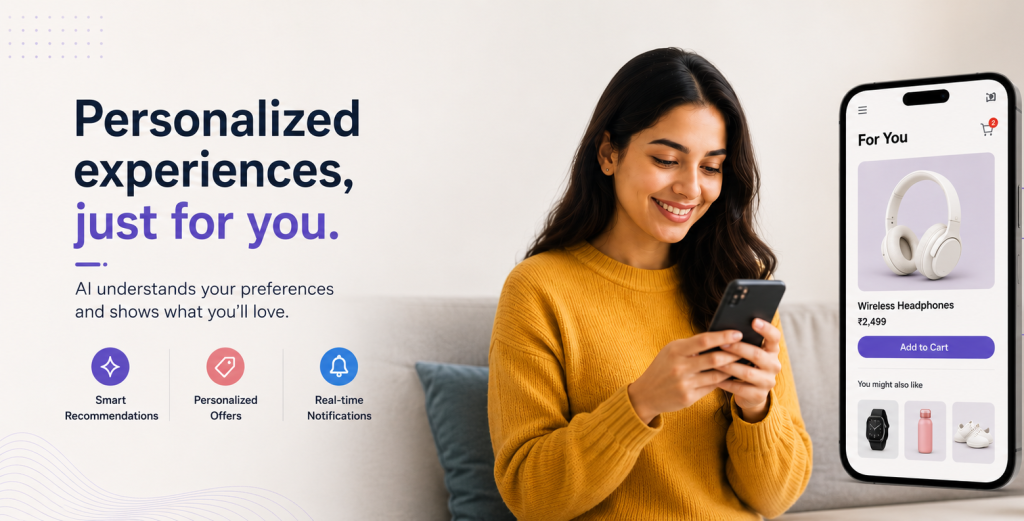
Today’s customers do not just want relevant content. They expect experiences that feel tailored to their needs, behavior, and preferences in real time. Generic messaging no longer works. The shift is clear. Brands that fail to personalize risk losing attention, trust, and ultimately conversions.
This is where hyper-personalized AI experiences come into play.
Artificial intelligence is transforming how businesses understand and interact with customers. It is moving beyond basic segmentation into something far more powerful. AI is now capable of delivering deeply personalized experiences at scale, making every interaction feel unique and meaningful.
What is hyper-personalization in AI?
Hyper-personalization refers to the use of AI, machine learning, and real-time data to deliver highly customized experiences to individual users.
Unlike traditional personalization, which relies on broad categories such as demographics or past purchases, hyper-personalization focuses on individual behavior, context, and intent.
It analyzes multiple data points, such as:
Browsing behavior
Purchase history
Real-time interactions
Device and location data
Content preferences
The goal is simple. Deliver the right message to the right person, at the right time.
Why Traditional Personalization Is No Longer Enough
For years, personalization meant adding a customer’s name to an email or recommending products based on past purchases. While effective at one point, this approach is now limited.
Customers today interact with brands across multiple channels. Their preferences change quickly. Static personalization strategies cannot keep up with this level of complexity.
For example, a user browsing a product late at night may have a different intent compared to someone browsing during work hours. Traditional systems fail to capture this context.
Hyper-personalized AI experiences solve this by adapting in real time. They understand not just who the customer is, but also what they need in that specific moment.
How AI Enables Hyper-Personalization
AI makes hyper-personalization possible by processing large volumes of data and identifying patterns that humans cannot easily detect.
Machine learning models analyze user behavior continuously. They predict preferences, recommend content, and optimize interactions dynamically.
Natural language processing allows AI to understand user queries and respond in a conversational and context-aware manner.
Real-time data processing ensures that recommendations and messages are updated instantly based on user actions.
Together, these technologies create a seamless and highly relevant user experience.
Real-World Examples of Hyper-Personalized AI
Hyper-personalization is already shaping how businesses interact with customers.
E-commerce platforms use AI to recommend products based on browsing patterns, purchase behavior, and even time spent on specific pages.
Streaming services suggest content based on viewing history, watch time, and user ratings.
Digital marketing platforms optimize ad creatives and messaging for individual users in real time.
Customer support systems use AI to provide personalized responses based on past interactions and user data.
In each case, the experience feels intuitive because it is built around the user.
Key Benefits of Hyper-Personalized AI Experiences
One of the biggest advantages is improved customer engagement. When users receive content that matches their interests, they are more likely to interact with it.
Hyper-personalization also increases conversion rates. Relevant recommendations and timely messaging drive better decision-making.
Customer retention improves as users feel understood and valued. This builds long-term relationships with the brand.
From a business perspective, AI-driven personalization improves efficiency by automating decision-making and reducing manual effort.
Challenges to Consider
While hyper-personalization offers significant benefits, it also comes with challenges.
Data privacy is a major concern. Businesses must ensure that user data is collected and used responsibly. Compliance with regulations is critical.
Another challenge is data quality. AI systems rely heavily on accurate and well-structured data. Poor-quality data leads to poor personalization.
There is also the risk of over-personalization, where users may feel uncomfortable if the experience becomes too intrusive.
Balancing relevance with privacy is key.
The Role of High-Quality Data
At the core of every hyper-personalized AI system is data.
The accuracy of personalization depends on how well the data is collected, labeled, and processed. High-quality datasets enable AI models to understand user behavior more effectively.
This includes:
Clean and structured data
Accurate labeling and annotation
Continuous data updates
Context-aware data interpretation
Without these elements, even advanced AI systems struggle to deliver meaningful personalization.
How Infolks Supports Hyper-Personalized AI
At Infolks, we help businesses build AI systems that deliver powerful, personalized experiences.
Our expertise lies in creating high-quality training datasets that enable AI models to understand user behavior, preferences, and context.
We provide:
Data annotation for text, image, audio, and video
Human-in-the-loop validation for better accuracy
Custom datasets tailored to specific industries
Multi-level quality assurance for reliable outputs
By ensuring data quality and consistency, we help businesses unlock the full potential of AI-driven personalization.
The Future of Hyper-Personalization
Hyper-personalized AI experiences are only going to become more advanced.
In the future, AI systems will:
Predict user needs before they are expressed
Adapt experiences across multiple platforms seamlessly
Deliver personalized content in real time across channels
Combine emotional intelligence with behavioral data
Businesses that embrace this shift early will gain a strong competitive advantage.
Final Thoughts
Hyper-personalization is redefining how brands connect with customers. It is not just about delivering content. It is about delivering the right experience at the right moment.
AI makes this possible by turning data into meaningful interactions.
For businesses, the opportunity is clear. Invest in data quality, leverage AI effectively, and focus on creating experiences that truly resonate with users.
Because in today’s digital landscape, relevance is everything.